 BEAUTURAL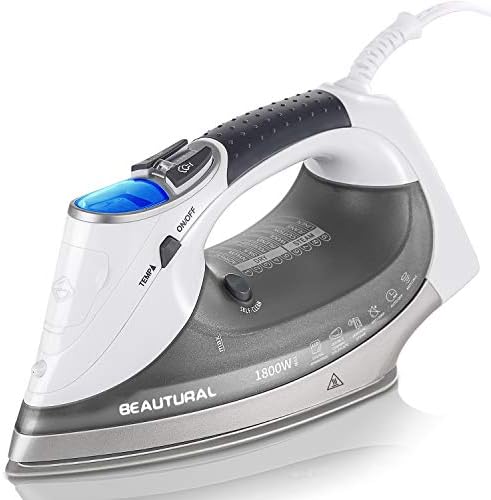
1800 Watts Steam Iron with Digital LCD Screen, 3-Way Auto Shutoff
1800-watt steam iron with digital presets for Sunday baskets of mixed fabrics
★★★★★$41.99
The Sunday press
Collar first or cuffs first, what the soleplate coating changes and why the water you pour in matters more than the temperature dial.
A shirt fights you when you press it in the wrong sequence, because every panel you finish gets crumpled by the next one you move. Go collar, cuffs, sleeves, yoke, then the body last. The parts that sit closest to your face get pressed while the iron is freshly filled, and the big easy panels close out the job. Ten minutes, start to finish, once the order is in your hands.
Our full-size irons run ceramic-coated or non-stick soleplates. Ceramic spreads heat evenly across the plate and glides over cotton and linen without grabbing. Non-stick shrugs off the residue that fusible interfacing and starch leave behind, which matters if the same iron also sees craft work. Either way, wipe the plate cool and dry before it goes back in the cupboard.
1500 and 1800 watts sound like a stove, but the number mostly decides how fast the iron climbs back to temperature after a burst of steam. An 1800 watt iron holds its heat through a basket of shirts; a lower wattage asks you to pause between pieces. If your ironing happens in stacks, the bigger number earns its place.
Hard tap water leaves mineral scale in the steam vents, and scale is what turns a smooth soleplate into one that spits brown flecks on a white shirt. If your kettle furs up, your iron will too: use distilled water, and empty the tank after each session instead of letting it sit. Our 1800 watt iron also shuts itself off three different ways when it sits still, which is a habit saver on rushed mornings.
1800-watt steam iron with digital presets for Sunday baskets of mixed fabrics
★★★★★$41.99
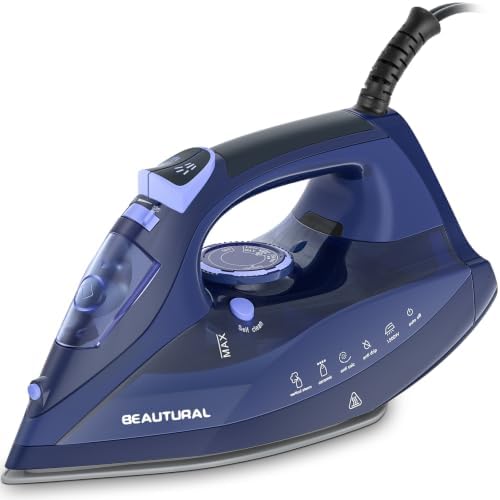
1500 watt ceramic soleplate iron built for crisp work shirts and linen trousers
★★★★★$36.97
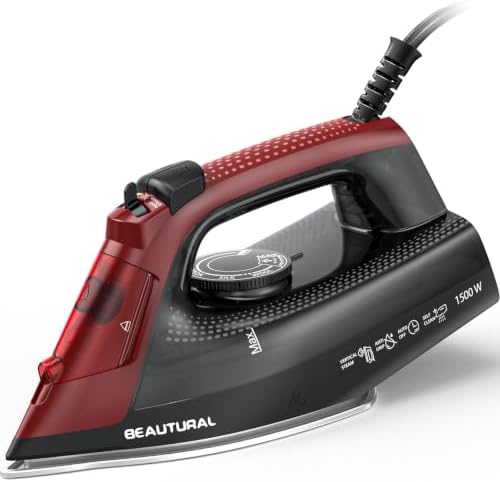
1500 watt ceramic steam iron for crisp cotton shirts and heavy weekly laundry
★★★★☆$29.97
The hanger-steaming routine for blazers and dresses: work top down, keep the fabric taut, and let the wrinkles fall out instead of pressing them flat.
Travel pressing explained: how dual voltage works across 110-120 and 220-240 volt outlets, and what the mini irons and the foldable dryer pack down to.